ARTICLE · The business
Future Casting: Are We Building Paradise or Pandora?
Future casting is most useful when it produces choices you can examine, rather than a single ending you are expected to believe.
Future Casting: Are We Building Paradise or Pandora?
YouTube stays disconnected until you choose to load this player. Loading connects to Google/YouTube, which receives your IP address and may use cookies or browser storage.
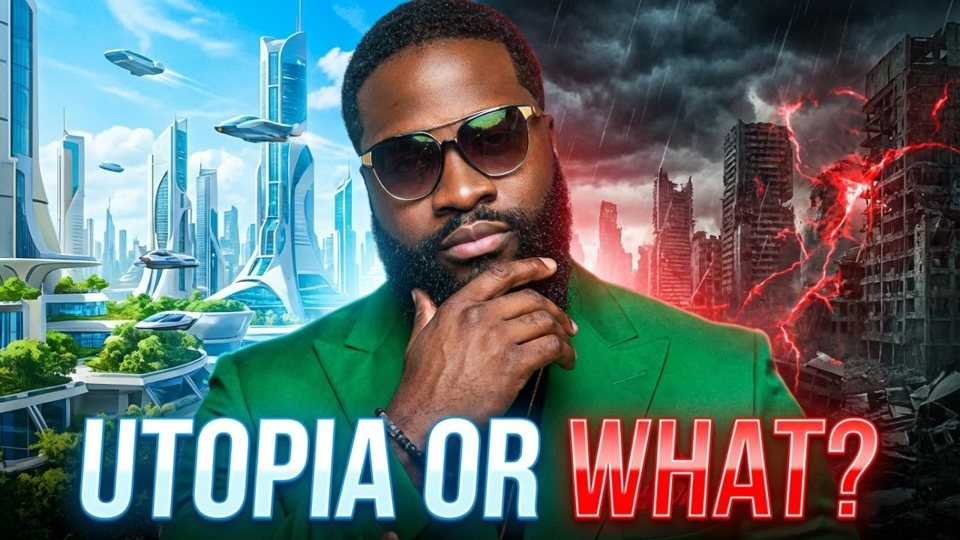
Paradise and Pandora make compelling poles for a conversation about AI. One emphasizes abundance, useful automation, and new possibilities. The other asks what happens when powerful systems develop consequences their creators did not anticipate.
Between those poles are decisions about deployment, ownership, access, and responsibility. A capability can help one group while concentrating power elsewhere. A tool can save time in one workflow while making another institution more dependent on an opaque supplier.
Write a future with actors in it#
Instead of saying “AI transforms education,” describe a classroom, a teacher, a learner, and a particular task. Who chooses the system? Who checks its answers? What happens to the time it saves? Which learner finds the new arrangement harder?
Then change one assumption and write the scene again. Perhaps access is expensive, the system is unreliable in one language, or the institution uses it to replace support rather than improve it. The contrast reveals which decisions matter.
This is a useful creative discipline for builders. You can remain excited about possibility while becoming precise about consequences. The best outcome of the conversation may be a better product requirement: a right to appeal, an understandable explanation, a manual fallback, or a decision to keep a person in the loop for a particular job.
See also