ARTICLE · Interviews
Becoming a Software Engineer in 2026 | AI, Deepfake Detection & My Tech Journey
Building AI software requires understanding the problem, examining the evidence, and knowing what an incorrect result would cost the people using it.
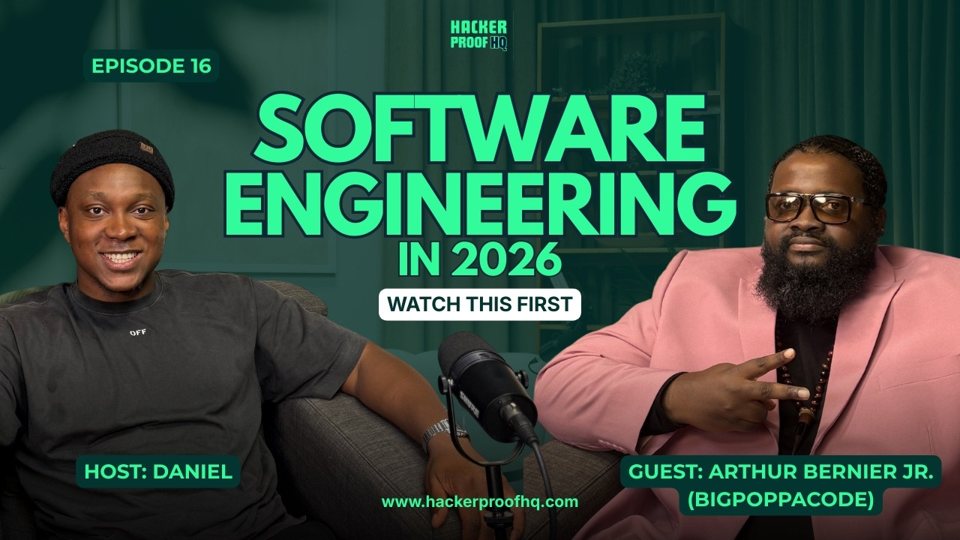
Becoming a Software Engineer in 2026 | AI, Deepfake Detection & My Tech Journey
YouTube stays disconnected until you choose to load this player. Loading connects to Google/YouTube, which receives your IP address and may use cookies or browser storage.
Arthur's interview with HackerproofHQ connects his path into software engineering with product building, learning languages, and work involving deepfake detection. That combination helps move the career conversation beyond the question of which language to learn next.
A language gives you a way to express a solution. Engineering also requires deciding what the system should do, how to evaluate it, and how to communicate its limitations. Those questions remain even when an AI tool helps produce parts of the implementation.
Think through both kinds of detection error#
Deepfake detection provides a useful example. A system might fail to flag manipulated material. It might also flag authentic material incorrectly. Those outcomes create different problems for a user, so one overall success figure can conceal important tradeoffs.
Before treating an output as a verdict, a builder needs to consider the evaluation examples, how closely they resemble real use, and how uncertainty is presented. The interface should help the user understand what a result can establish and when further investigation is needed.
The conversation also includes open-source collaboration. Contributing to an existing project can expose you to another essential skill: understanding decisions you did not make and improving the work without losing its purpose. As you watch, connect the career advice to these concrete responsibilities. Becoming an engineer includes learning how to make software others can understand, question, and depend on.
See also